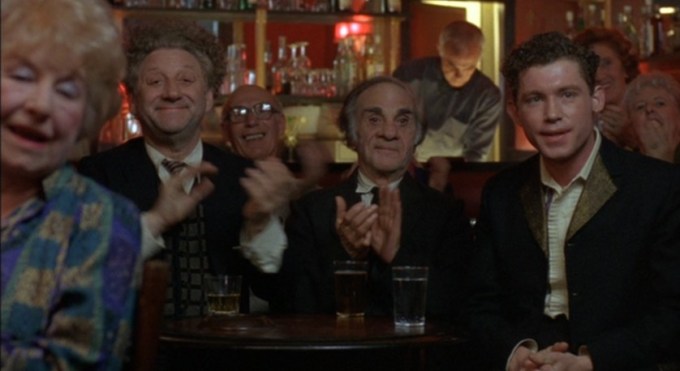
Directed by Peter Chelsom, 1995, 120 minutes
After a disastrous Vegas stand up debut comic Tommy Fawkes (Oliver Platt) flees the United States and takes refuge in Blackpool, England where he grew up with his comedian father George (Jerry Lewis). In Blackpool he meets the Parker brothers and their son Jack (Lee Evans) who help him to come to terms with his past and recover his comic inspiration.
They say that the secret of great comedy is timing, be it the rhythmic precision of Buster Keaton’s slapstick or the pregnant pause before a Bill Hicks punchline. When Peter Chelsom scored a surprise hit with ‘Hear My Song’ (1991) Disney’s Hollywood Pictures took notice. Cinema in the early nineties wallowed in the smug conservatism of First World complacency: The Cold War was won; genocide in Rwanda and civil war in Bosnia were merely background noise to the Millennium countdown. On paper ‘Funny Bones’ looked like another winner; its quirky story, gilded by a touch of nostalgia from retired stars Leslie Caron and Jerry Lewis seemed certain to charm the same demographic that bought into ‘Hear my Song’. Unfortunately for the accountants ‘Funny Bones’, with its more melancholic strain of comedy left audiences uncertain whether to laugh or to cry. Twenty-five years later, in a world where folly trumps reason and madmen wear crowns, we finally get the joke.
The greatest clowns, from Grimaldi to Lenny Bruce knew all about grief and despite its gently smiling demeanour ‘Funny Bones’ has much to say about mortality. The punning title suggest the skull that grins beneath the clown’s whiteface and Chelsom mordantly reminds us that death is always waiting in the wings when he sets a riotous slapstick routine in a mortuary. Comedy has danced into the dark before, but ‘The Entertainer’ (Tony Richardson, 1960) and ‘The Joker’ (Todd Phillips, 2019) are pathos, with few belly laughs. ‘Funny Bones’ has much more to offer than gallows humour: Chelsom also celebrates the disarming innocence of the ridiculous; when Tommy holds an audition to find fresh material for his act hopefuls include singing dogs, a one-man band with no instruments and a spectral ‘Bastard Son of Louis XIV’ complete with toy guillotine (Shane Robinson). This is ‘Britain’s Got Talent’ without the po-face or ‘The Gong Show’ without cruelty. We laugh with, but not at the bizarre performers, awestruck by the sheer madcap invention and bravura of each turn.
Born and raised in Blackpool, Chelsom composes a conflicted love song to his hometown, pulling away the cosy security blanket of nostalgia as Tommy Fawkes uncovers the poignant home truths behind his childhood memories. Blackpool is presented as a senescent music-hall star, fading away in a cheap old-people’s home like a forgotten showbiz aunt. During its heyday in the 1920s and 1930s northern Britain’s mill towns emptied as workers flocked to the seaside for their annual Wakes Week holiday. Like Las Vegas Blackpool is bipolar; offering escape from the discipline of working life whilst simultaneously reinforcing a comforting brand of social conservatism. The British seaside experience offers hedonism with a moral safety net. Stanley Houghton’s play ‘Hindle Wakes’ (1910) and its four cinematic adaptations chronicled this now forgotten world of communal holidays where chaos and conformity jostle uncomfortably on the overcrowded dancefloor of the Tower Ballroom.
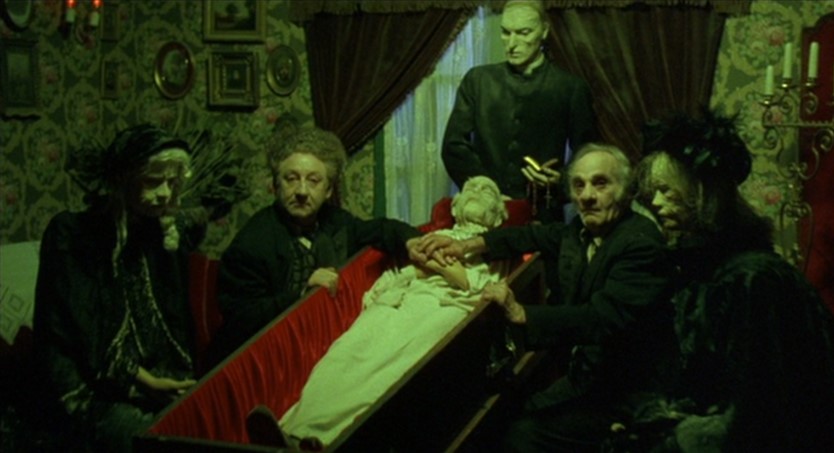
By the time that Chelsom returned to Blackpool to shoot ‘Funny Bones’ it had been left behind by social demographics. With no fishing fleet it has no raison d’être other than to entertain. Blackpool in the twenty first century remains plagued by economic deprivation and chronic unemployment. Poor public health indicators and premature mortality scores mark it as one of the unhealthiest places to live in Britain. Chelsom’s clear affection for Blackpool is tempered by a sobering dose of realism, the resort caught out of season under grey skies. For the Parker family Blackpool has become a prison, their lives trammelled by failure: They live in a tiny cell, hemmed in by the carnival grotesquery of funhouse and rollercoaster; reduced literally to dummies in the local ghost train, where their deadpan performance proves too much for one of the older patrons. Blackpool’s fortunes may revive as economic recession bites and like the Parkers, the ‘Vegas of the North’ may step back into the limelight, if only for a moment. Chelsom resists the easy view of the holiday resort as a seedy parasite that feeds on human frailty and adopts a more forgiving approach personified by Jim Minty (Richard Griffiths), the town’s avuncular marketing officer. At the film’s climax there is still room for some magic in a place that has given so much pleasure to so many.
Freud tussled with grammar to try to understand how jokes work but got no closer to understanding why we laugh. Chelsom (like Freud) distinguishes between the joker who ‘tells funny’ and the clown who ‘is funny’. Freud, who enjoyed a good joke, would appreciate the psychodrama of Tommy Fawkes’ yearning to escape from his father’s shadow. Tommy chafes against the constraints of stand-up with it’s saleable, designer gags. His lavish Vegas debut ends disastrously when he compromises the fragile relationship between the comic and his audience, provoking rather than pandering to their expectations with more ‘appropriate’ material. Returning to Blackpool he finds a wellspring of comic invention in Jack Parker, who, like the great vaudevillians and music hall stars repurposes popular culture for comic effect. Jack’s exhilarating routine plays like a pop art collage by Peter Blake with a nod to Andy Kaufman’s ‘Mighty Mouse’, a mash up of kitsch americana that includes snatches of radio and fifties pop; this found soundtrack enhances Evans’ formidable talent for mimicry and physical comedy. This dazzling performance delights his audience, far removed from the glacial hostility and forced smiles of Tommy’s Vegas debacle. Like Tommy, Jack is also trapped by his past; he teeters constantly between comedy and catastrophe. Whether seeking refuge on the top of a swaying mast or besieged at the pinnacle of Blackpool Tower the world is always closing in around him. His chaotic existence breeds unpredictable comedy that threatens to turn into horror in a moment. Like all the best clowns (and small children) Jack can be innocent, vulnerable, and frightening at the same time. He is a cursed and privileged figure; like the court jester whose bad joke or off-colour remark could prove fatal. Clowning celebrates reversal, the freedom of carnival or saturnalia where anyone can be king for a day, except the king himself. At the film’s climax Jack is enthroned as the Lord of Misrule but a palpable sense of tension keeps the audience guessing as to whether Jack’s performance will end in triumph or tragedy.
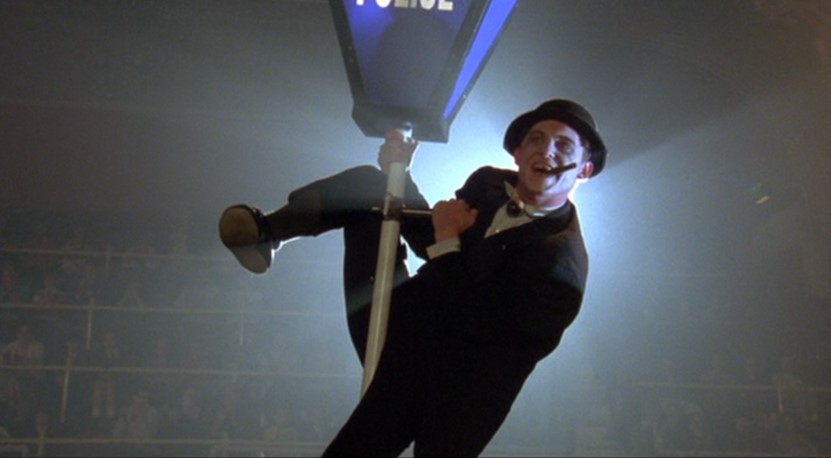
‘Funny Bones’ and its cast reflect an eclectic gamut of comic styles: American stand-up, the dry wit and ‘jeu de mots’ of French cabaret and circus clowning. Jerry Lewis is ideal casting, a gag man who also excelled at physical comedy. Here, as in ‘King of Comedy’ (Martin Scorsese, 1982) Lewis seems relieved to be playing it straight. His generous, low-key performance allows room for the rest of the ensemble to shine, particularly old vaudevillian George Carl and Freddie Davis as the Parker brothers. Lee Evans is the heart of the film, but underrated Oliver Platt is its conscience, brittle, mercurial and eminently watchable. Leslie Caron almost steals the show with understated gallic charm. Much has changed since ‘Funny Bones’ was released. In our increasingly embattled world comedy, like much else has become contested ground. The joker has long depended on prejudice, mockery is cruel, but humourist Jean Paul Richter argued that “Freedom produces jokes and jokes produce freedom”. The jester’s ability to speak truth to power is much too valuable to shackle in the name of good taste or decency. If we are shocked or offended, we can always walk away. Once we encourage the insidious tendency to self-censorship, we stifle our capacity for criticism and give spurious figures of authority free rein. The greatest clowns acknowledge that pain is part of life, death may be waiting but we can greet him with a rueful smile. Watching ‘Funny Bones’ is a cheering and uplifting experience, a rare example of humour without rancour and welcome respite as arguments rage about taste and taboo in comedy. The time has come for Chelsom’s tender, humane little masterpiece to step back into the limelight and take a bow.
Quotes:
“I never saw anything funny that didn’t cause pain”.
Bruno Parker (Freddie Davis)
Connections
Film.
‘Hindle Wakes’ directed by Maurice Elvey (1918 and 1927); Victor Saville (1931); Arthur Crabtree (1952)
‘The Entertainer’ directed by Tony Richardson (1960)
‘King of Comedy’ directed by Martin Scorsese (1982)
‘Wish You Were Here’ directed by David Leland (1987)
‘Man in the Moon’ directed by Milos Forman (1999)
Reading.
Sigmund Freud, Jokes and their Relationship to the Unconscious, Penguin, 2002 (1905), ISBN 978-0141185545
Gordon Burn, Alma Cogan, Minerva, 1992 (1991), ISBN 0749398167
 simplysourdust
You must be logged in to post a comment.