
directed by Andrzej Żuławski, 1971, 102 minutes
In Nazi occupied Poland, Michał (Leszek Teleszyński) recuperates from typhus with his wife Helena (Małgorzata Braunek) and son at his father’s country house. When his family is killed by invading troops he returns to the city and joins the resistance. He narrowly evades arrest when Nazi agents confuse him for another, identically dressed passerby; he takes shelter with the captured man’s wife Marta, who closely resembles his dead wife, just as she gives birth. To support Marta and her child, Michał becomes a feeder for infected lice, his blood harvested by army doctors to manufacture typhus vaccine for enemy troops. As the destruction of the ghetto escalates, disease and trauma distort his hold on reality.
Andrzej Żuławski was born in 1940 in what was then Lwów, Poland, and is now Lviv, the capital of Ukraine. His family suffered under both Nazi and Soviet oppression, his childhood marked by domestic tragedy, particularly the death of his younger sister. His family escaped to liberated Paris, where he studied film and philosophy. Even those too young to fully understand or take an active part in the horrors taking place around them can retain a corrosive burden of guilt and fear, Żuławski recalls that as a child he felt that Stalin had personally declared war on his family. In ‘The Traumatic Surreal’ (2022), Patricia Allmer studies the work of artists in Germany and Austria following the second world war. She argues that surrealism’s direct channel to the subconscious provides a cathartic space where survivors can confront deeply embedded feelings of guilt, fear and shame with less risk of social and political reprisal.
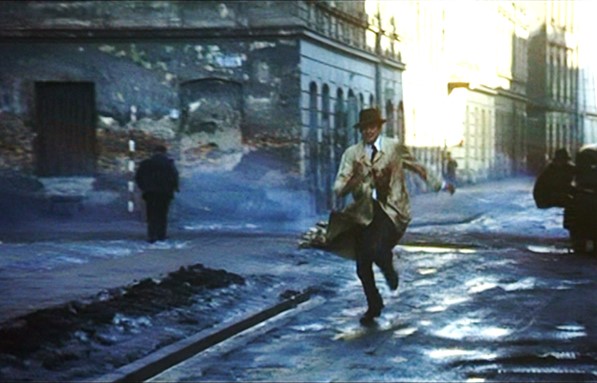
Żuławski’s work is haunted by apocalyptic imagery. ‘Diabel’ (1972) is set during the revolutionary turmoil of the eighteenth century; it plays like a deranged precursor to Ridley Scott’s ‘The Duellists’ (1977) with a heavy dose of religio-mania and some alarming “…voguish patriotic dances.” His ambitious, unfinished science fiction epic ‘On The Silver Globe’ (1988) foreshadows the destructive, authoritarian theocracy depicted in Denis Villeneuve’s ‘Dune’ sequence (2021-2024). Żuławski’s first major film, ‘The Third Part of the Night’ is an hallucinogenic roman-à-clef, loosely inspired by his parent’s struggle to survive under Nazi occupation. It opens as Helena recites the book of Revelation with the relentless cadence of runaway train, the insistent Polski sibilants of “trzecia część” (“third part”) sputter like a fizzing fuse. This sequence prefigures the prologue of ‘Don’t look Now’ (Nicholas Roeg, 1973), but Żuławski presents the trauma without by any cinematic flourishes to soften the blow. His films are often semi-documentary in style, frenetic mobile camera and abrupt edits immerse us in a chaotic vortex of violence and hysteria. When reality shifts seamlessly into the surreal, ‘Third Part’ seems closer to the stylised fetishism of Hitchcock, but without any trace of the master’s drollery to lighten the tone. Michał’s precarious day-to-day existence becomes so bizarre that we are never certain if what we see is real or imagined. All the familiar thriller trappings are present, but Żuławski invests trenchcoated agents and breathless pursuits through labyrinthine streets with a bizarre, totemic lustre. Michał’s fawn raincoat and trilby are not just there to lend a touch of style or authenticity; they become the means to rewind his broken life and regain his lost family; vertiginous stairwells yawn like time tunnels from ‘The Outer Limits’ (created by Leslie Stevens, 1963-1965). Żuławski’s soundscapes are an unsettling, clangourous mashup of electronica and pop jazz punctuated by staccato dialogue, sometimes delivered straight to camera. His frenzied, unpredictable style keeps the viewer in a state of tense discomfort, like the feeders, constantly itching the enflamed skin beneath their lice phylacteries.
Żuławski’s family experienced oppression and genocide at first hand, memories of things witnessed but half-forgotten recur as reality and fantasy merge in his work. Like Elem Klimov’s ‘Come and See’ (1985), ‘Third Part of the Night’ transports us to a world of mass displacement and casual executions, where humanity hangs desperately over the void. Almost everyone that we meet in ‘Third Part of the Night’ is already dead, they are just waiting for their bodies to catch up. As in Kurt Vonnegut’s ‘Slaughterhouse 5’ (1969) linear time is fractured by trauma, and Michał is cast adrift. The doubling of Marta/Helena is both confusing and disturbing, we are never certain whether she is flesh, flashback or fantasy. In Michał’s traumatised imagination she becomes the harbinger of apocalypse, an incarnation of his own bereavement and guilt. The doppelgänger may be a response to psychological stress, an extreme form of mental compartmentalisation that allows us to replay the past in the third person. This device recurs in Żuławski’s most notorious film ‘Possession’ (1981), which has a particularly intimate relationship with ‘Third Part of the Night’. Watched back-to-back, similarities and continuities are striking: ‘Possession’s haunted cityscapes echo with memory, not only of the Nazi regime but also the Cold War victims killed crossing from east to west; divided Berlin is a besieged ghetto under constant threat of annihilation. ‘Third Part of the Night’ begins with the destruction of one family, ‘Possession’ ends with another. The stairwell that features so prominently in the climax of ‘Possession’ closely resembles that which facilitated Michał’s escape in ‘Third Part of the Night’. Together, these films form a circle, like two phases of the same panic dream. If, as Allmer suggets, Żuławski’s art is an exercise in self-therapy his extreme approach took a heavy toll on some of his collaborators. Actors Isabelle Adjani and Sam Neill acknowledged the emotional honesty of ‘Possession’ but struggled with Żuławski’s confrontational, sometimes brutal directing style. Those damaged by trauma risk inflicting their pain on others.
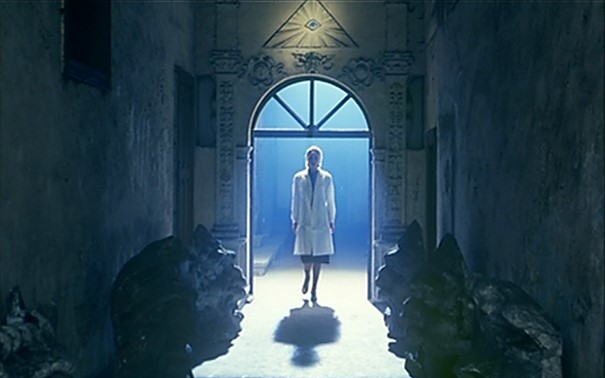
Żuławski, like many others who fled Stalinist Soviet repression to the relative freedom of the capitalist west understood that all human societies are potentially fascist states. Civilization is a fragile veneer, when society collapses and behavioural parameters disappear morality becomes a luxury and contingency prevails. Ordinary people must make extraordinary compromises to survive in untenable situations. In ‘The Third Part of the Night’, feeders are paid with illegal doses of the vaccine that they have incubated to protect themselves and their loved ones. They are forced into a perverse, symbiotic collaboration with their oppressors to delay deportation or extermination. In Żuławski’s cinema there are no saviours, human or superhuman, only solidarity and sacrifice. Here, as in the real world, hope and sacrifice shine brighter for being unsung and unheroic. Sister Klara’s (Anna Milewska) quiet insistence on staying with the people she has sheltered is even more moving because it is so underplayed. ‘Third Part’ also offers a timely reminder that fascists loathe, fear and persecute difference of any stripe, be it race, religion, gender, or simply those who think differently to themselves. The feeders were once university professors and poets, to the invaders they simply raw material; they read poetry and discuss philosophy to pass time as the lice ingest their blood. Like Michał’s father (Jerzy Golinski), who symbolically destroys his music and books, they conclude that art has no place in a world where all humanity has been erased. Most artists fumble to grasp the horrific enormity of genocide, language fails and our eyes turn away. Spielberg’s reverential ‘Schindler’s List’ (1993) presents the holocaust as spectacle; the exquisite monochrome photography may ravish the senses, but it also distances the viewer; conventional characterisation and hagiography blunt the narrative. Others, like Pier Paolo Pasolini in ‘Salò’ (1975) or Liliana Cavani in ‘The Night Porter’ (1974) look closer and portray how fascism deforms the psyche by exploiting our deep-seated need to control or relinquish control to others.
Żuławski’s stubborn refusal to offer simplistic, heroic solutions reflects our own sense of powerlessness when facing overwhelming forces of political oppression. His films test a range of responses to human malice and find them all wanting: Michał’s experiences in ‘The Third Part of the Night’ reveal the limits of armed opposition; there are no heroic raids or rescues, only random violence, the blind resistance leader admits that he is operating, literally and philosophically in the dark.; in ‘On the Silver Globe’ he demonstrates how religious fervour engenders repressive conformity and genocidal crusade; those seeking sanctuary in domestic or romantic bliss find only self-destructive dysfunction in ‘Possession’. His work may seem too bleak in a world of bad news, but when all other means of protest are denied, artistic expression becomes an act of resistance. When too much reality overwhelms, fiction can breach our defences and rekindle empathy. Allmer concludes that the traumatic surreal helps us to confront historical atrocities, art can encourage us to learn from the past, but it should also serve as a warning. Żuławski cannot offer us much comfort but he acknowledges that outspoken testimony and refusal to condone (or conform) is sometimes our best hope; in this regard his films have increased in relevance in the years since they were produced. Despite his unforgiving mien Żuławski is never cynical, in a world of fake news and AI slop, his films offer a bracing dose of honest originality.
Connections
Film
‘Slaughterhouse 5’ Directed by George Roy Hill (1972)
‘The Tin Drum’ Directed by Volker Schlöndorff (1979)
‘Possession’ Directed by Andrzej Żuławski (1981)
‘Come and See’ Directed by Elem Klimov (1985)
Reading
Patricia Allmer, The Traumatic Surreal, Manchester University Press, 2022, ISBN 9781526178831
Music
Olga Neuwirth ‘Bählamms Fest’ (The Feast of the Lambs), Kairos, 2004
Quotes:
“Oh, God, who allows cruelty to be propagated and people to torment each other…Oh, God, who elevates the most evil ones and puts the whip into their hands…Oh merciless God, have no mercy upon us”
Michał’s father (Jerzy Golinski)
“You see, only lice are important because they keep you alive. You shouldn’t harm or cheat them. They’re your mothers, carrying death in their intestines and you are wet nurses to your own mothers, feeding them with death.”
Helena/Marta (Małgorzata Braunek)
 simplysourdust
You must be logged in to post a comment.